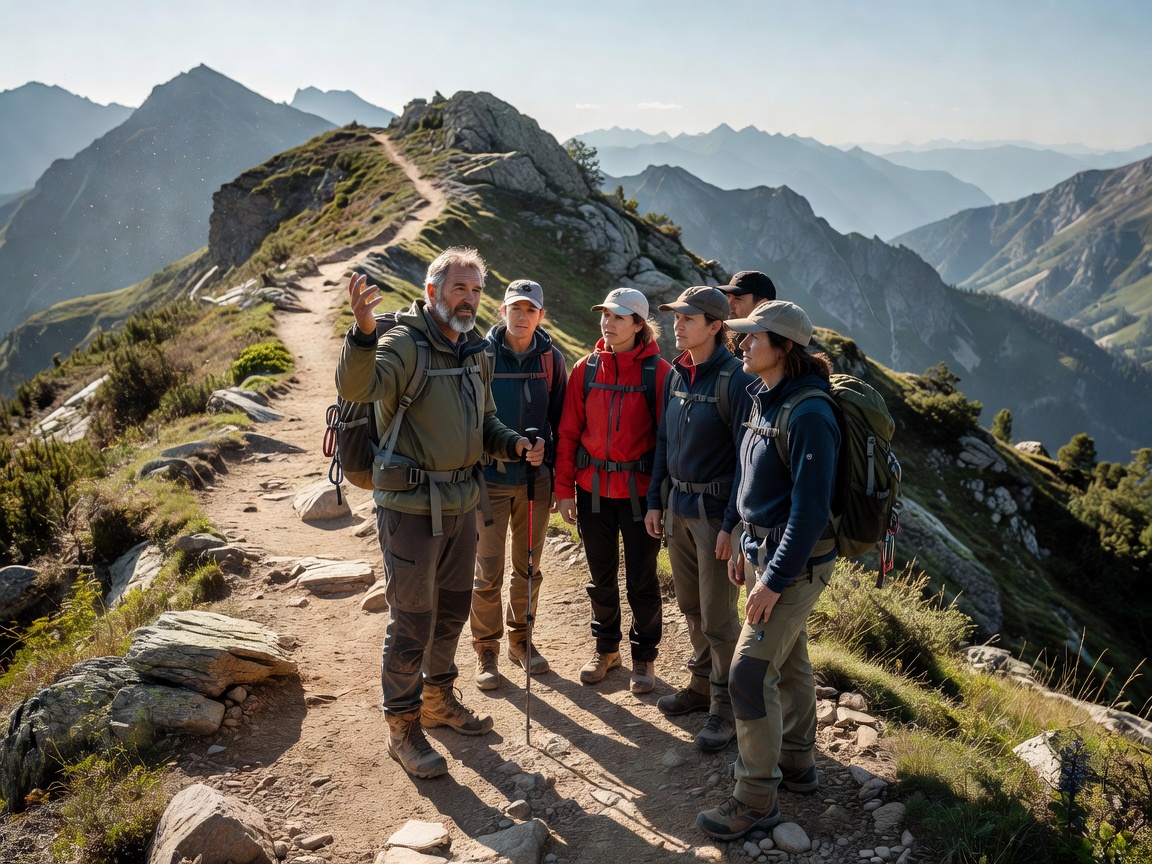
What the subject covers
Mountain leadership is the practice of preparing a group, reading the operating environment and making proportionate decisions. It is broader than route finding. It includes communication, pace, positioning, observation and review.
Training may be recreational, professional development or part of a formal qualification pathway. These categories are not interchangeable. A short skills course can improve judgement without creating a regulated licence or employment credential.
Core training blocks
Terrain awareness. Read slope, exposure, surface, escape options and the effect of fatigue. Use local information and current conditions rather than relying on a previous trip.
Group management. Set expectations before departure. Confirm experience, equipment, pace and communication signals. Keep the group within a manageable operating picture.
Route decisions. Establish a primary route and sensible alternatives. Define decision points before pressure rises. A retreat or change of plan is a leadership action, not a failure.
Communication. Brief in short, specific statements. Ask for confirmation. Invite relevant observations from the group. Record decisions when the session format allows.
Practical exercises
Useful exercises include a pre-departure briefing, a terrain observation log, a timed navigation leg and a structured debrief. The point is not speed. It is to expose assumptions and improve consistency under supervision.
Good fit for
- People leading walking or outdoor groups.
- Instructors building a structured practice base.
- Participants preparing for further supervised training.
- Teams that need a shared decision vocabulary.
What to verify
Check the terrain used, instructor experience, supervision ratio, assessment method, weather policy, equipment list and whether the course is general education or linked to a formal qualification. Ask how learning is evidenced. Do not assume a certificate has regulatory status.
Selection checklist
- Define the terrain and group you expect to lead.
- Match the course to your current experience.
- Confirm practical time, not only classroom content.
- Ask how changes, cancellations and incident reporting are handled.